Paris' Haussmannian buildings define the city's elegant aesthetic, yet most visitors miss their hidden stories and finest examples. Over 60% of central Paris' architecture stems from Baron Haussmann's 19th-century redesign, but travelers often wander past these masterpieces unaware of what makes them special. The frustration comes when you later realize you stood before extraordinary facades without appreciating their revolutionary design principles or sociohistorical significance. This oversight leaves travelers with generic vacation photos rather than meaningful connections to Paris' urban evolution. The challenge lies in identifying which boulevards showcase the most spectacular specimens and understanding the subtle details that distinguish exceptional Haussmannian work from ordinary period buildings.
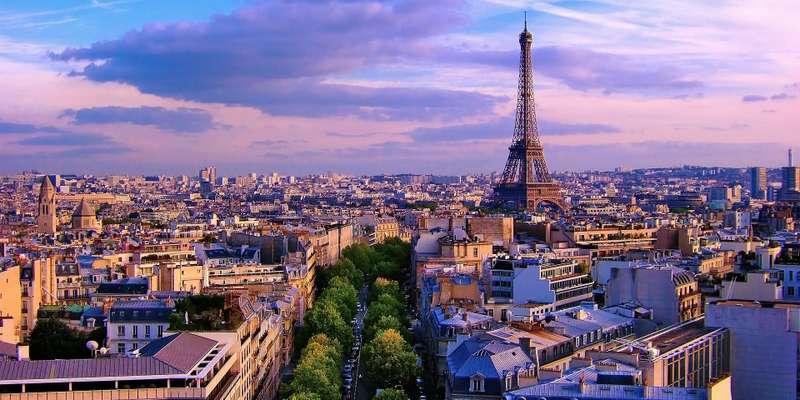
Why Haussmannian architecture deserves your attention
Haussmann's transformation of Paris between 1853-1870 created the first modern metropolis, with buildings designed for light, air circulation, and social equality. The signature cream-colored limestone facades with wrought-iron balconies weren't just aesthetic choices - they represented groundbreaking urban planning. Napoleon III commissioned Haussmann to replace medieval slums with wide boulevards that prevented disease spread and revolution barricades. Today, these buildings house some of Paris' most coveted apartments, their uniform heights (six stories maximum) and aligned windows creating that iconic Parisian streetscape. Recognizing true Haussmannian design means spotting the subtle hierarchy - more ornate second-floor 'noble' levels for aristocracy, simpler upper floors for servants. This architectural democracy hiding in plain sight makes Haussmann's work profoundly different from earlier aristocratic palaces.
View all Tours
The must-see Haussmannian boulevards and squares
Boulevard Haussmann itself ironically showcases later variations, but nearby Rue La Fayette presents perfect early specimens between Gare du Nord and Opéra. The triangle formed by Avenue de l'Opéra, Rue de Rivoli, and Boulevard Saint-Germain contains some of the most photogenic examples, particularly around Place de la Madeleine. For quintessential Haussmann, stroll Rue de Miromesnil near Élysée Palace where building corners curve gracefully to follow street angles. Don't miss Square d'Orléans in the 9th arrondissement - this private courtyard (Paris' first gated community) reveals how Haussmannian design blended collective living with discretion. Local architects know the buildings at 124 Rue Réaumur push Haussmannian style to its decorative limits, while Rue Monsigny's 1867 post office demonstrates how the style adapted to public buildings.
UPDATES FOR YEAR 2026
Navigating the New Restricted Traffic Zones and Restored Facades
The experience of viewing Parisian architecture has shifted significantly with the full enforcement of the Limited Traffic Zone (ZTL) across the first four arrondissements. This initiative has removed nearly all through-traffic from the historic center, making boulevards like Rue de Rivoli and the streets surrounding the Louvre far quieter and more accessible for architectural photography. Additionally, under the city's latest climate and heritage initiatives, a massive wave of facade restorations is underway. Travelers will notice many 'pierre de taille' facades emerging from scaffolding with their original bright white limestone restored, free from decades of urban soot. To navigate these areas, utilize the expanded 'Plan Vélo' cycling network, which now includes dedicated lanes along major Haussmannian arteries, offering a faster and more scenic alternative to traditional transit. Be aware that access to public interiors, such as the Hôtel de Ville, now requires strict digital pre-booking weeks in advance as the city transitions to a fully reservation-based heritage model.
View all Tours
Decoding Haussmannian details like an architect
Trained eyes spot superior Haussmannian buildings by their stonework quality - the finest use pierre de taille (dressed stone) with barely visible seams. Examine window arches: early period (1852-1860) has rounded arches, middle period (1860-1870) uses flat arches with decorative keystones. Superior buildings feature carved floral motifs beneath second-floor balconies and intricate door surrounds with female figures symbolizing industry or arts. The best-preserved interiors retain original features like herringbone parquet, marble fireplaces, and glass-paneled doors. While most Haussmannian apartments are private, you can glimpse interiors at Musée Carnavalet or by visiting the 1st arrondissement's covered passages like Galerie Vivienne which used similar construction techniques.
View all Tours
Experiencing Haussmannian Paris beyond the facades
Several Haussmannian buildings now house remarkable public spaces worth visiting. The Hôtel de Ville's reconstruction after the Paris Commune fire perfected Haussmann's ideals, while the Grand Hôtel du Louvre pioneered modern amenities within Haussmannian form. For a unique perspective, book a table at Le Grand Colbert restaurant - its 1900 interior preserves period details within a Haussmannian shell. Architecture enthusiasts can stay in converted Haussmannian buildings like Hôtel Banke Opera, where rooms showcase original moldings. Free walking tours from Paris City Hall often cover Haussmannian highlights, while specialized architecture tours provide access to normally closed courtyards. Evening is prime viewing time, when golden light accentuates the buildings' horizontal lines and uniform proportions.
View all Tours
FAQ 2026
How does the Paris Limited Traffic Zone (ZTL) affect visiting Haussmannian boulevards in 2026?
The ZTL now prohibits non-essential through-traffic in the 1st, 2nd, 3rd, and 4th arrondissements. This has drastically reduced vehicle noise and congestion, creating a much more pedestrian-friendly environment for admiring the architectural details of central Haussmannian landmarks.
Are there any specific booking requirements for architectural tours in Paris during 2026?
Yes, many iconic buildings have moved to mandatory digital time-slot reservations. For example, guided group tours of the Hôtel de Ville must be booked at least two months in advance, while major architectural exhibitions at the Cité de l'Architecture now require pre-purchased mobile tickets.
Will I see scaffolding on Haussmannian buildings in 2026 due to the Plan Climat?
You may see increased restoration work as buildings are upgraded for thermal efficiency and aesthetic preservation. However, this also means 2026 is an excellent time to see many famous facades newly cleaned and glowing in their original cream-colored limestone state.
Written by Paris Tours Editorial Team & Licensed Local Experts.
Last updated: 24/02/26
