Standing atop Montmartre's cobbled slopes, nearly 60% of first-time visitors miss the neighborhood's truly exceptional viewpoints, according to Paris tourism surveys. The challenge isn't finding elevated spots - it's identifying vantage points that combine unobstructed panoramas with that quintessential Parisian atmosphere. Most travelers waste precious hours shuffling between overcrowded terraces or peering through restaurant windows, never quite capturing that postcard-perfect moment. The frustration compounds when you realize iconic sights like the Eiffel Tower appear distant or partially obscured from many well-trodden paths. With limited time in the City of Light, settling for mediocre views means missing the emotional crescendo of your Paris journey - that magical instant when the entire cityscape unfolds before you, etching itself permanently in your memory.
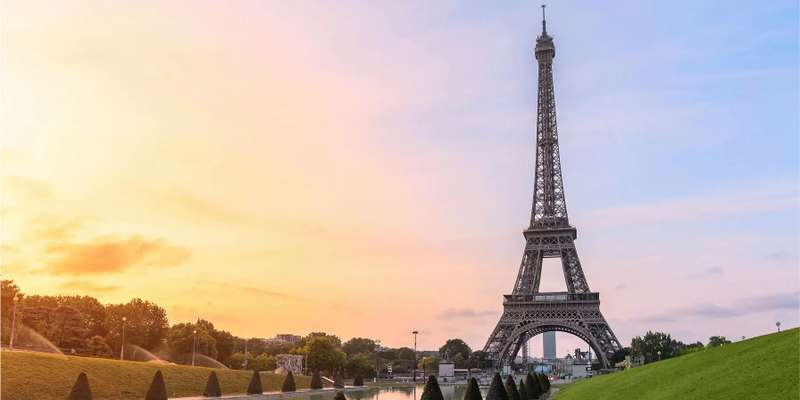
Escaping the Sacré-Cœur crowds for authentic vistas
While the Sacré-Cœur Basilica's dome offers undeniable 360-degree views, the experience often feels transactional - you'll queue for 45 minutes just to share a cramped observation deck with dozens of others. Savvy travelers head instead to Square Marcel Bleustein-Blanchet, a tucked-away garden just northwest of the basilica. This hidden perch delivers equally spectacular perspectives over northern Paris, with the added bonus of hearing the wind rustle through chestnut trees rather than tour group chatter. Arrive by 8am to claim one of the seven iron benches facing the city - local artists have quietly cherished this spot for decades. The angle perfectly frames Saint-Vincent Cemetery's greenery against the distant La Défense skyline, offering a nuanced contrast of old and new Paris that most visitors completely overlook.
UPDATES FOR YEAR 2026
Essential Logistics and Updated Access Rules for Montmartre Visitors
Navigating Paris's most iconic hilltop now requires updated logistical planning due to significant changes in local regulations. Visitors should be prepared for a substantial increase in the 'taxe de séjour' (tourist tax), which has risen to fund regional transport upgrades; expect to pay between €6.60 and €15.93 per adult per night depending on your accommodation's rating. Additionally, in response to the district being highlighted for overtourism, new 'quiet zones' and group size limits of 25 people are being strictly enforced to protect the local atmosphere. If you're using the funicular to reach the summit, traditional paper tickets have largely been replaced by the 'Navigo Easy' pass or smartphone-based contactless payment. For those driving nearby, be aware that the 'Paris Respire' program has expanded, making many streets surrounding the Butte exclusively pedestrian-only on Sundays and public holidays to mitigate the 'Disneyfication' of the neighborhood.
View all Tours
The local-approved sunset alternative to Trocadéro
When golden hour approaches, skip the predictable Trocadéro scramble and follow Montmartre residents to Allée des Brouillards. This slender pathway near the Montmartre vineyard becomes bathed in warm light as the sun dips behind the Arc de Triomphe. Unlike elevated viewpoints, this perspective places you at tree-canopy level with central Paris, creating an intimate 'floating' sensation as the city lights begin twinkling. Photographers prize the natural framing from overhanging branches - no need for awkward zooming to crop out crowds. For optimal positioning, stand near the vintage lamppost halfway down the path, where the angle reveals both the Eiffel Tower and Sacré-Cœur in a single romantic composition. Regulars suggest bringing a light sweater even in summer; the microclimate here stays breezy as thermals rise from the Seine valley below.
View all Tours
Navigating Montmartre's secret staircases to elevated gems
Montmartre's network of nearly 200 staircases holds the key to unexpected panoramas, if you know which steps to climb. The Escalier de la Rue Foyatier might be famous, but its relentless 222 steps lead only to tourist bottlenecks. Instead, seek out Passage Cottin, a narrow service staircase used by delivery workers that emerges directly behind the Maison Dali museum. The unassuming entrance disguises what locals call 'the painter's ascent' - each landing offers framed views resembling famous Impressionist canvases. At the sixth flight, pause at the westward-facing window cut into the stone wall; this deliberate architectural feature perfectly aligns with the dome of Les Invalides three miles away. Such carefully composed perspectives explain why artists like Utrillo frequented these passageways, though modern visitors rarely discover them without guidance.
View all Tours
Beyond the postcard: capturing Paris' soul from Montmartre
The most memorable Montmartre views aren't necessarily the widest - they're the ones that reveal Paris' layered personality. Rue de l'Abreuvoir's sloped curve showcases pastel houses with the Eiffel Tower peeking between rooftops, embodying the village-within-a-city charm. For a dynamic metropolitan tableau, the Musée de Montmartre's terrace juxtaposes vineyard rows with the Pompidou Center's industrial pipes. True connoisseurs time their visit for the blue hour, when the city transitions from day to night; from Place Dalida's secluded bench, you'll witness thousands of windows illuminating sequentially across arrondissements like a cascading wave of light. These nuanced perspectives require no admission fee, just patience and positional awareness. Remember that Montmartre's magic lies not in checklist viewpoints, but in discovering your own personal window onto Paris - just as the neighborhood's bohemian pioneers once did.
View all Tours
FAQ 2026
What are the updated Paris tourist tax rates for 2026?
Starting January 1, 2026, the Paris tourist tax has seen a major increase due to a 200% regional transport surcharge. Depending on your hotel category, expect to pay between €6.60 and €15.93 per person per night, a cost usually collected separately from your room rate upon check-in.
Are there new restrictions on tour groups in Montmartre for 2026?
Yes, to combat overtourism and maintain local livability, authorities are now enforcing a 25-person cap on walking tour groups. The use of loudspeakers by guides is also strictly prohibited throughout the historic hilltop district to reduce noise pollution.
Is the Montmartre funicular still accepting paper tickets in 2026?
While standard T+ tickets are valid, the RATP has shifted heavily toward digital and contactless payments. Visitors in 2026 are encouraged to use a Navigo Easy card or the official mobile app to tap-and-go at the funicular gates, as paper ticket machines are increasingly rare at the base station.
Written by Paris Tours Editorial Team & Licensed Local Experts.
Last updated: 24/02/26
