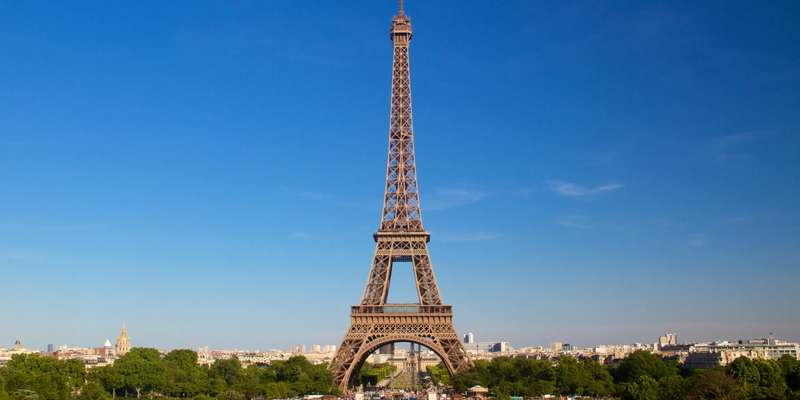
Paris overwhelms architecture lovers with impossible choices. With over 2,000 historical monuments and 153 museums, visitors waste 32% of their trip time in lines or deciding where to go next (Paris Tourism Office, 2023). The stress of missing masterpieces like Sainte-Chapelle's stained glass or the Palais Garnier's gold leaf interiors leaves travelers exhausted. Morning crowds at the Eiffel Tower and confusing ticket systems for lesser-known gems turn what should be awe into frustration. Meanwhile, locals whisper about secret Art Deco facades in the 16th arrondissement and quiet courtyards that guidebooks ignore.
Navigating post-fire Notre-Dame: What you can really see now
The 2019 fire left many assuming Notre-Dame was off-limits, but the surrounding area offers surprising vantage points. From Square Jean XXIII behind the cathedral, you get an unobstructed view of the flying buttresses and restoration progress – a living architecture lesson. While interior access remains closed until 2024, the archaeological crypt nearby reveals original foundations and medieval urban planning. Tuesdays and Thursdays at dusk, when tour groups thin out, provide the best light for photographing the scaffolding-free west facade. Local architects recommend pairing your visit with Saint-Séverin church (a 5-minute walk) to compare Gothic styles without the crowds.
UPDATES FOR YEAR 2026
Navigating the Reopened Notre-Dame: New Entry Protocols and Viewing Tips
The architectural landscape of Paris has reached a pivotal milestone with the full restoration and reopening of Notre-Dame’s interior. Access is no longer restricted to the perimeter; however, a mandatory digital reservation system is now in place to manage the high volume of visitors. To experience the cleaned white nave and restored medieval glass with minimal disruption, secure a 'First Entry' slot between 8:00 AM and 9:00 AM. While the nave is accessible, the newly reinforced treasury and the archaeological crypt require separate timed-entry vouchers. Expert tip: The most striking view of the reconstructed spire is now from the Quai de Montebello, where the absence of heavy scaffolding provides an unobstructed profile of the leadwork and roofline. Ensure you have the 'Notre-Dame de Paris' official app downloaded to access real-time queue updates and augmented reality displays explaining the structural reinforcement techniques used during the rebuild.
View all Tours
The Haussmann revolution: How to read Parisian facades like a pro
Napoleon III's urban planner Georges-Eugène Haussmann transformed Paris between 1853-1870, but most visitors miss the subtle variations in these iconic cream stone buildings. Start at Place Saint-Michel to see early prototypes with simpler iron balconies, then follow Boulevard Saint-Germain to spot later additions like sculpted keystones. The 7th arrondissement's Rue de Grenelle hides rare original shopfronts at numbers 44 and 58 – look for the lower ceiling heights indicating pre-Haussmann structures. For a self-guided tour, track building dates using the plaque system (PLU numbers above doorways) and notice how upper-floor designs soften near Sacré-Coeur, where height restrictions created unique attic spaces.
View all Tours
Art Nouveau secrets beyond the Metro signs
While Guimard's Metro entrances are iconic, Paris holds deeper Art Nouveau treasures often overlooked. The 13th arrondissement's Butte-aux-Cailles neighborhood features entire streets of preserved 1900s architecture, like the biosca-style La Ruche artist residence. Wednesday mornings, when the Musée des Arts Décoratifs opens early, let you examine Hector Guimard's original furniture sketches without weekend crowds. Few know about the fully intact 1905 Lavirotte building at 29 Avenue Rapp – its ceramic-clad doorway wins among architecture students for most photomorphic details. Carry a wide-angle lens to capture the swirling balconies of Square Rapp's lesser-known twin at 3 Square Rapp.
View all Tours
Timed entry tricks for Sainte-Chapelle's stained glass
Sainte-Chapelle's 1,113 biblical scenes in stained glass create a kaleidoscope effect – if you time it right. Arriving 30 minutes before closing (summer weekdays except Wednesday) lets you see the lower chapel's restored ceiling when guards are less strict about movement. The conciergerie combo ticket saves €3 but more importantly gives priority access when lines exceed 90 minutes at noon. Local art historians suggest positioning yourself in the northeast corner at 2:15 PM in May-September, when sunlight hits the Apocalypse panel with cinematic intensity. Download the 'Chapelle 13' app beforehand to identify individual panels without blocking others' views.
View all Tours
FAQ 2026
Do I need a reservation to enter Notre-Dame Cathedral in 2026?
Yes, in 2026, all visitors must book a specific time slot through the official digital ticketing platform. While entry to the main nave remains free, these reservations are mandatory to control capacity and are typically released 15 days in advance.
What is the best time to visit Sainte-Chapelle to avoid crowds in 2026?
For 2026, the best strategy is to book the first slot on a Tuesday or Thursday morning. Following the implementation of strict hourly caps, mid-day slots are often fully booked weeks ahead, making early morning the only way to photograph the stained glass without significant crowds.
Are there new environmental or tourist fees for Paris monuments in 2026?
In 2026, Paris has implemented an adjusted 'Taxe de Séjour' (tourist tax) which is included in your accommodation costs. Additionally, many state-run monuments have shifted to dynamic pricing, where booking off-peak weekday slots can save you up to 20% on entrance fees compared to weekend visits.
Written by Paris Tours Editorial Team & Licensed Local Experts.
Last updated: 24/02/26
